How to Bet on World Cup

The FIFA World Cup is unlike any other football competition on the calendar. It arrives once every four years, draws billions of viewers across the globe, and generates some of the largest betting volumes in all of sport. The sheer scale of it — dozens of nations, weeks of fixtures, and narratives that build with every match — creates a betting environment that rewards preparation and punishes impulsiveness.
If you want to understand how to bet on World Cup 2026 effectively, this guide covers everything from the basics of reading odds to live betting strategy, from picking a trustworthy sportsbook to avoiding the mistakes that cost most casual bettors money. The 2026 tournament, co-hosted by the United States, Canada, and Mexico from June 11 to July 19, is also the first to feature 48 teams and 104 matches — the largest edition in history — which means more markets, more games, and more opportunities to find value.v
Best Betting Sites for World Cup

bet365
Welcome Bonus- Best live in-play markets
- 500+ World Cup bet types
- Early payout offer
- iOS & Android app

DraftKings
Best App- #1 rated mobile app
- Same-game parlay builder
- Fast instant payouts
- Odds boosts daily

FanDuel
Best UX- Smoothest user experience
- Live streaming available
- Bet builder feature
- Loyalty rewards

BetMGM
Top Odds- Superb WC outright odds
- Odds boost promos
- Full stats centre
- MGM Rewards program

William Hill
100% Acca Boost- Unbeatable WC markets
- Up to 100% acca boost
- Cash out on all matches
- 24/7 customer support
World Cup Betting Basics
Before placing any wager on the World Cup, you need two things: a clear grasp of how odds work and a working knowledge of the terminology sportsbooks use. Neither requires a mathematics degree — but skipping this foundation is the most common reason casual bettors consistently lose money.
What Are Sports Betting Odds
Odds represent the price a sportsbook is willing to pay on a given outcome. They reflect two things simultaneously: the implied probability of an event happening and the potential profit on your stake. When you learn how to bet on football world cup matches, understanding odds formats is the single most important technical skill you can build before placing any wager.
Odds also encode the bookmaker’s margin — commonly called the “vig” or “juice” — which is built into every line. This is why the combined implied probability of all outcomes in a market always exceeds 100%. That excess is the sportsbook’s built-in edge.
Key Betting Terms to Know
Familiarizing yourself with core betting vocabulary makes it far easier to navigate sportsbook interfaces and compare markets across different platforms. Before exploring specific bet types, it helps to have these terms down clearly:
- Moneyline — A straight bet on which team wins. No point spread involved.
- Spread/Handicap — One team is given a virtual goal advantage or disadvantage to level the betting field.
- Over/Under (Totals) — A bet on whether total goals scored will be above or below a set number.
- Asian Handicap — A more nuanced version of the spread that eliminates the draw outcome.
- Accumulator (Parlay) — Multiple selections combined into one bet. All must win for a payout. Higher potential return, significantly higher risk.
How World Cup Betting Works
The World Cup’s tournament structure creates betting opportunities that simply don’t exist in regular league football. You’re not just betting match by match — you’re navigating a competition with group dynamics, knockout pressure, and a 39-day narrative arc that shapes odds from the first fixture to the final whistle.
Betting on Individual Matches
At the match level, you’re betting on outcomes within a specific 90-minute (or extra time) fixture. Common options include the match winner, total goals, both teams to score, Asian handicap lines, and correct score markets. If you want to know how to bet on FIFA World Cup matches in the most straightforward way, match betting is where to start.
The 2026 expanded format means there are 104 matches in total, spread across a 39-day tournament — nearly double the games per day compared to a typical major tournament. This creates a wide variety of fixtures with different tactical profiles, risk levels, and price points.
Betting on Groups and Tournament Outright
Beyond individual games, sportsbooks offer markets on how teams perform over the entire tournament — or a specific stage of it. You can bet on which teams finish top of their group, which nations reach the Round of 16 or the quarterfinals, who wins the Golden Boot, and who lifts the trophy. The 2026 format also adds a new market dimension: with eight best third-placed teams progressing, there are now “group survivor” bets with more nuance than before.
Choose Your Type And Start Betting
Best Types of World Cup Bets
Not all World Cup bets carry the same risk profile or require the same level of research. Some reward match-by-match analysis; others demand a broader view of how a squad is likely to perform across six or seven games. Understanding how each bet type works helps you allocate your betting budget with more intention.
Match Bets (Winner, Draw, Both Teams to Score)
The most commonly placed bet on any World Cup fixture is the 1X2 — a three-way market covering a home win, draw, or away win. In international football, draws are significantly more common than in club competition, which makes this market less predictable than it looks. Both Teams to Score (BTTS) has become one of the most popular ancillary markets. Correct score betting offers high potential returns but low probability, making it a high-risk option that should represent only a small fraction of any betting plan. If you’re figuring out how to bet FIFA world cup markets as a newcomer, starting with the 1X2 or BTTS markets gives you the cleanest introduction to football betting mechanics.
Asian Handicap is worth learning early. It removes the draw as a possible outcome by giving one side a half-goal or fractional handicap, which means your stake is either won or returned — never lost to a draw result.
Futures and Outright Bets (Top Scorer, Tournament Winner)
Outright bets are placed before the tournament begins and settle only when the final whistle blows in July. The tournament winner market is the most liquid, with major sportsbooks offering lines on all 48 teams. Spain, France, England, Brazil, and Argentina typically dominate the short end of the market.
Top scorer markets follow individual forwards throughout the tournament. These bets are high-variance by nature — a single injury or a team’s unexpected early exit can void the wager, depending on sportsbook rules. Always check the specific terms before committing.
How to Read Odds
Sportsbooks display odds in three formats: American, decimal, and fractional. All three convey the same information — the implied probability and potential return — just in different ways.
- American odds use a baseline of $100. Negative numbers show how much you must risk to win $100 (e.g., -150 means risk $150 to win $100). Positive numbers show the profit on a $100 stake (e.g., +300 means a $100 bet returns $300 profit).
- Decimal odds show total return per unit staked, including your original stake. Odds of 2.50 on a $10 bet return $25 total ($15 profit).
- Fractional odds are traditional in the UK. Odds of 5/2 mean you win $5 for every $2 wagered. To convert to implied probability:
So odds of 3.00 carry an implied probability of 33.3%. If you assess the true probability to be higher than that, the bet represents value. This concept — value betting — is the foundation of all serious sports betting. It does not mean betting on long shots; it means finding odds that underestimate an outcome’s real likelihood.
World Cup Betting Strategy
The first rule of World Cup betting is to treat each game on its own merits. The temptation to back big-name teams based on reputation alone is one of the most reliable ways to lose money over a tournament.
Before placing any bet, look at:
- Recent squad form — Not just results, but how the team is performing tactically
- Key injuries and suspensions — A missing striker or holding midfielder can fundamentally change a team’s output
- Head-to-head history — Particularly for Group Stage matchups between nations with historical patterns
- Tournament pressure context — Some teams perform better when backs are against the wall; others collapse
- Group difficulty and rotation — Managers often rest players in low-stakes fixtures, inflating odds on both sides
Betting on tournament favorites at tight odds is rarely good value. By the time Spain or France reach the final, their odds may be -200 or shorter — mathematically thin, with enormous downside. Spreading exposure across different markets and finding undervalued mid-table teams in early group games is where sharp bettors build an edge over a full tournament.
Start Betting
How to Bet on World Cup Group Stage
The group stage spans the first two weeks of the tournament and delivers the highest volume of fixtures in the shortest time. It also produces the most predictable pricing errors, because sportsbooks are working with limited in-tournament data when setting early lines.
What Makes Group Stage Bets Different
The group stage is the most tactically complex phase to bet on, because teams are managing across three matches simultaneously rather than playing each fixture in isolation. A team that has already qualified may rest its starting eleven in the final group game, making the result near-unpredictable. You need to understand if and when teams have incentives to win — or not to.
Draws are also statistically more common in the group stage than in knockout rounds. That affects which markets offer the best value. Before you decide how to place a bet on the world cup group stage, knowing where each team stands in the group table at the time of the match is as important as knowing the teams themselves.
Finding Value in Early Matches
The first round of group games is where odds are at their most uncertain. Sportsbooks are pricing teams primarily on reputation and qualifying form, without the context of in-tournament performance. This creates pricing inefficiencies — particularly when relatively unknown teams are playing established nations at neutral venues.
Look for matches where the betting public has over-indexed on name recognition. A well-organized African or Asian side facing a European powerhouse in a neutral venue may be priced at 8/1 or longer, even when their defensive record and tactical setup gives them a genuine chance of a draw or upset. Early group matches, before narrative momentum takes hold, are where the best pre-game value tends to exist.
How to Bet on World Cup Knockout Stage
From the Round of 16 onward, every match carries elimination stakes — and that changes almost everything about how teams play and how odds are priced. Bettors who apply the same logic from group games to knockout rounds frequently find themselves on the wrong side of results.
How Elimination Changes the Odds
Once the group stage ends, the tournament shifts completely. Every match is a final — lose and you go home. This changes the way teams set up tactically, the way managers approach team selection, and the way odds move.
If you’re asking how do I bet on world cup knockout matches differently from group games, the core answer is: expect closer contests, more defensive setups, and more value in draw-related markets. The 1X2 market becomes less efficient in the knockout rounds because both teams are playing to avoid elimination, not to maximize goal difference.
Double Chance betting — backing two of the three 1X2 outcomes in a single market — becomes more attractive when two evenly-matched teams face off. Draw No Bet is another sensible tool: it backs a team to win outright, but refunds your stake if the match ends level.
Betting on Extra Time and Penalties
Many knockout matches go beyond 90 minutes, and sportsbooks offer dedicated markets for this. You can bet specifically on whether a match will be decided in normal time, extra time, or a penalty shootout. These markets are priced separately and are worth exploring when two defensively solid teams meet.
Penalty shootout results are close to a coin flip historically, but sportsbooks often overprice the team perceived as more clinical. Some books also offer markets on which player takes the first penalty, how many penalties are scored in the shootout, or whether the shootout ends before five rounds. These are niche, high-variance bets — interesting to explore, but not a core strategy.
Live Betting on the World Cup
In-play betting has transformed how people engage with football, and the World Cup amplifies that dynamic considerably. With matches broadcast globally and the entire planet watching simultaneously, live markets during major fixtures move faster and more efficiently than almost any other betting environment — which makes timing and discipline essential.
How In-Play Betting Works
Live betting lets you place wagers on a match while it is being played. Odds update in real time based on the score, possession, cards shown, time remaining, and any other relevant developments. This creates a different betting environment from pre-game markets: you have more information, but you also have less time to act.
World Cup matches are particularly well-suited to in-play betting because the tournament structure creates predictable behavioral patterns. A team that concedes in the first 20 minutes and starts chasing the game creates live value in next-goal and match-result markets. A side that dominates possession but hasn’t scored may see its win odds lengthen despite its clear advantage.
The key discipline in live betting is patience. Wait for meaningful moments in the match — a red card, a goal, a tactical switch — before acting, rather than placing bets based on early minute-to-minute movement.
Crypto Betting on the World Cup
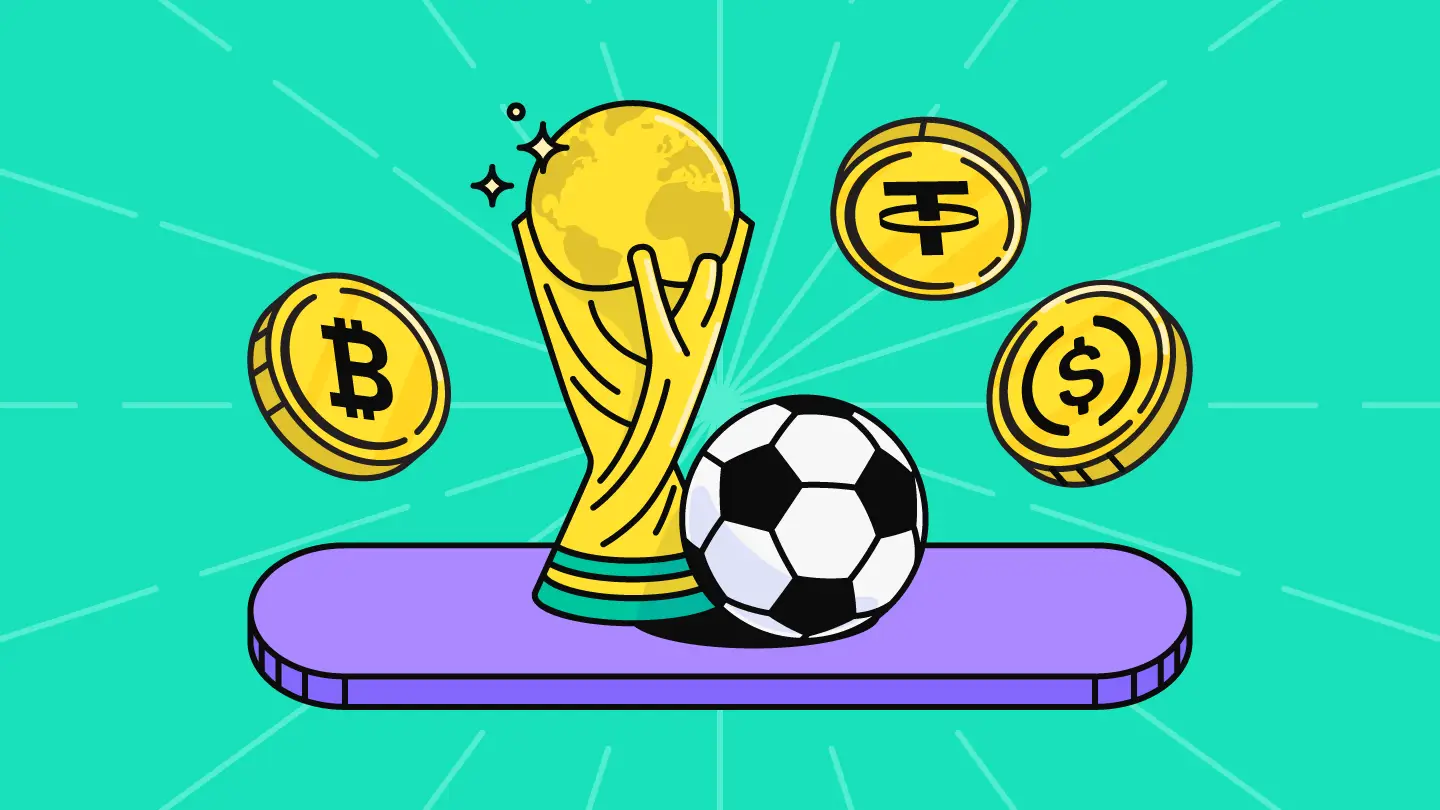
Cryptocurrency has become an increasingly mainstream payment method at online sportsbooks, and the 2026 tournament is the first World Cup where crypto betting has genuine mainstream scale. Understanding how to bet on world cup 2026 with crypto requires knowing what to look for in a sportsbook before depositing. Bitcoin, Ethereum, and stablecoins like USDT are the most commonly accepted currencies at crypto-friendly platforms.
Crypto sportsbooks typically operate with faster withdrawals, lower transaction fees, and sometimes better odds than traditional payment platforms. However, they vary enormously in legitimacy. Before depositing crypto on any platform, verify that the site holds a license from a recognized regulator (Malta Gaming Authority, UK Gambling Commission, Curaçao, or similar), read independent reviews, and confirm the withdrawal process before committing significant funds. Never deposit crypto on unlicensed or newly established platforms without substantial third-party verification.
Common Betting Mistakes
Most losses in World Cup betting come from a handful of recurring errors:
- Chasing losses — Increasing bet sizes after a losing run to “get back to even” is the fastest way to drain a bankroll
- Betting without research — Placing wagers based on gut feeling or national bias rather than actual form, squad news, and odds analysis
- Ignoring value — Backing heavily-priced favorites because they feel safe; short-odds favorites lose far more often than the casual bettor expects
- Over-relying on accumulators — Four or five-team accumulators feel exciting, but the compounding odds mean even one unexpected result voids the entire ticket
- Betting every match — The World Cup runs for 39 days with dozens of fixtures; not every game is worth betting on. Discipline means skipping uninspiring markets
- Missing line shop opportunities — Not comparing odds across multiple sportsbooks means leaving potential value on the table every single time
How to Choose a Sportsbook
Choosing where to bet matters almost as much as what you bet on. A sportsbook with poor odds, limited markets, or unclear withdrawal policies can erode your returns even when your selections are correct. There are two layers to evaluate: regulatory safety first, then commercial terms.
Licensing and Safety
A sportsbook’s license is the single most important factor in evaluating it. Licenses from the UK Gambling Commission (UKGC), Malta Gaming Authority (MGA), or New Jersey Division of Gaming Enforcement indicate that a site is subject to real regulatory oversight, including segregated customer funds and dispute resolution processes.
Avoid platforms that list obscure licensing jurisdictions without verifiable regulatory information. If a sportsbook’s license cannot be independently confirmed through the regulator’s official website, treat it as unlicensed regardless of what it claims.
Odds, Markets, and Bonuses
Once licensing is confirmed, compare how deep the market coverage is. For the World Cup, you want a sportsbook that offers group-stage outright markets, player props, live betting, Asian handicap, and alternative lines — not just basic 1X2 coverage.
Bonuses are attractive but frequently misleading. Welcome offers typically come with wagering requirements — often 5x to 30x the bonus amount — that effectively lock your funds until you’ve placed multiple times the original value. Read the rollover requirements, eligible markets, minimum odds conditions, and time limits before accepting any offer. A 100% deposit match with a 30x wagering requirement at minimum 1.80 odds is far less valuable than it appears at face value.
Responsible Betting
Betting on the World Cup should be treated as entertainment — a way to add engagement to matches you’d already be watching — not as a supplementary income or a path to profit over time.
Set a budget for the tournament before it starts, and treat it as spent money. Do not adjust that budget upward based on early wins or losses. Most regulated sportsbooks offer deposit limits, session time alerts, and temporary self-exclusion tools. Using these features is not a sign of weakness — it’s how experienced bettors manage variance and protect themselves from emotionally-driven decisions.
If betting is starting to feel stressful, compulsive, or financially significant in ways that concern you, organizations like BeGambleAware (UK), the National Problem Gambling Helpline (US), or Gambling Help Online (AU) offer free, confidential support. The most important outcome of World Cup betting is that it remains enjoyable. The moment it stops feeling that way, take a break.
FAQ
Outright markets open months — sometimes years — before the tournament begins. Early odds can offer genuine value before the market sharpens, but squad news and late injuries closer to the start date matter significantly for more specific bets.
Occasionally, but they should represent a very small portion of your total betting activity. The more selections you combine, the more likely a single surprise result eliminates your entire stake. Limit accumulators to confirmed strong favorites at reasonable odds, and never use them as your primary betting vehicle.
Yes, sportsbooks offer markets on all 104 fixtures. But betting every game is a sure way to dilute your research quality and accumulate losses through low-value wagers. Be selective — focus on the matches where you have a clear rationale.
Tournament winner futures and match result (1X2) bets generate the highest volume. During live matches, next goalscorer and total goals markets see heavy in-play action.
It depends entirely on the bet type and sportsbook rules. Many standard match winner bets settle on 90-minute results only. Bets specified as “including extra time” settle after 120 minutes. Always check the specific market rules before placing.
Draw No Bet is a market that eliminates the draw as a settling outcome. If the match ends level, your stake is returned. If your selected team wins, you collect the payout. It’s a lower-return but lower-risk alternative to the standard match winner bet.
Odds shift constantly as new information emerges: injuries, suspensions, tactical information from press conferences, and actual match performances all move the market. Teams that overperform in the group stage see their outright odds shorten significantly; early exits naturally remove all remaining markets.
Most major licensed sportsbooks offer in-play markets for every World Cup fixture. Coverage depth varies — some offer only basic in-play lines for less high-profile group games, while marquee knockout matches carry full live betting suites.
Conclusion
Betting on the World Cup well comes down to preparation, discipline, and an honest understanding of how odds work. Research your markets, compare prices across sportsbooks, and focus on finding value rather than backing the most popular teams. The expanded 2026 format offers more opportunities than any previous tournament — but more markets also mean more chances to bet carelessly. Choose a licensed sportsbook, understand the bonus terms before accepting anything, and set a firm budget for the tournament before the opening whistle. Approached with the right mindset, World Cup betting is one of the most rewarding forms of football wagering there is — provided you treat it as what it is: a high-skill, high-variance form of entertainment, not a financial strategy.
