How the FIFA World Cup 2026 Format Works

The 2026 FIFA World Cup is unlike any that has come before it. For the first time in the tournament’s history, 48 nations will compete — a major structural overhaul that changes how does the world cup work from the ground up. The expansion introduces a brand-new knockout round, significantly increases the total number of matches, and demands a deeper understanding of bracket logic from fans who want to track their team’s path to the final. This guide breaks down every layer of the format, from the group stage mechanics to the knockout bracket, so you know exactly what to expect when the tournament kicks off in June 2026.
Best Betting Sites for World Cup

bet365
Welcome Bonus- Best live in-play markets
- 500+ World Cup bet types
- Early payout offer
- iOS & Android app

DraftKings
Best App- #1 rated mobile app
- Same-game parlay builder
- Fast instant payouts
- Odds boosts daily

FanDuel
Best UX- Smoothest user experience
- Live streaming available
- Bet builder feature
- Loyalty rewards

BetMGM
Top Odds- Superb WC outright odds
- Odds boost promos
- Full stats centre
- MGM Rewards program

William Hill
100% Acca Boost- Unbeatable WC markets
- Up to 100% acca boost
- Cash out on all matches
- 24/7 customer support
Overview of the New Format
The 2026 World Cup represents a clear break from the format used at every tournament since 1998, when 32 teams competed in eight groups. FIFA’s decision to expand to 48 teams brings three structural changes: a larger field, more matches overall, and a completely new first knockout round called the Round of 32.
FIFA’s rationale for the expansion was to give more confederations — particularly from Africa, Asia, and the CONCACAF region — meaningful access to the tournament. For fans, it means more games, more nations represented, and a longer, more complex tournament path to follow.
How Many Teams Are in the 2026 World Cup
Exactly 48 teams will participate in the 2026 World Cup, and understanding how many teams in world cup 2026 compete from each region requires looking at confederation allocations. The breakdown is as follows:
- UEFA (Europe): 16 spots (12 automatic + 4 via confederation playoff)
- CAF (Africa): 9 spots
- AFC (Asia): 8 spots (6 automatic + 2 via playoffs)
- CONCACAF (North/Central America & Caribbean): 6 spots
- CONMEBOL (South America): 6 spots
- OFC (Oceania): 1 spot
- Inter-confederation playoffs: 2 additional spots
The expansion significantly benefited CAF and AFC, both of which previously had far fewer guaranteed berths. Europe’s representation also grew in absolute terms, though its proportional share decreased slightly compared to the 32-team era.
Group Stage Format
How Groups Are Structured
The 48 qualified teams are divided into 12 groups of four. Each team plays three matches in a round-robin format, facing every other team in its group once. This means every nation is guaranteed at least three competitive matches before the knockout stage begins — a key feature FIFA cited when justifying the new format.
How Teams Advance from the Group Stage
Advancement is determined as follows: the top two teams in each group qualify automatically for the Round of 32, just as group winners and runners-up have always done. The key difference in 2026 is what happens to third-placed teams. Rather than being eliminated outright, the eight best third-placed finishers from across all 12 groups — ranked by points, then by goal difference, and then by goals scored — also advance. This produces exactly 32 teams heading into the knockout bracket: 12 group winners, 12 runners-up, and 8 third-place qualifiers.
The Round of 32 (New Stage)
The Round of 32 is the most significant structural addition to the 2026 World Cup and exists solely because of the tournament’s expansion to 48 teams. In all previous editions since 1998, the first knockout round was the Round of 16. Now, 32 teams must win one additional match before reaching that stage.
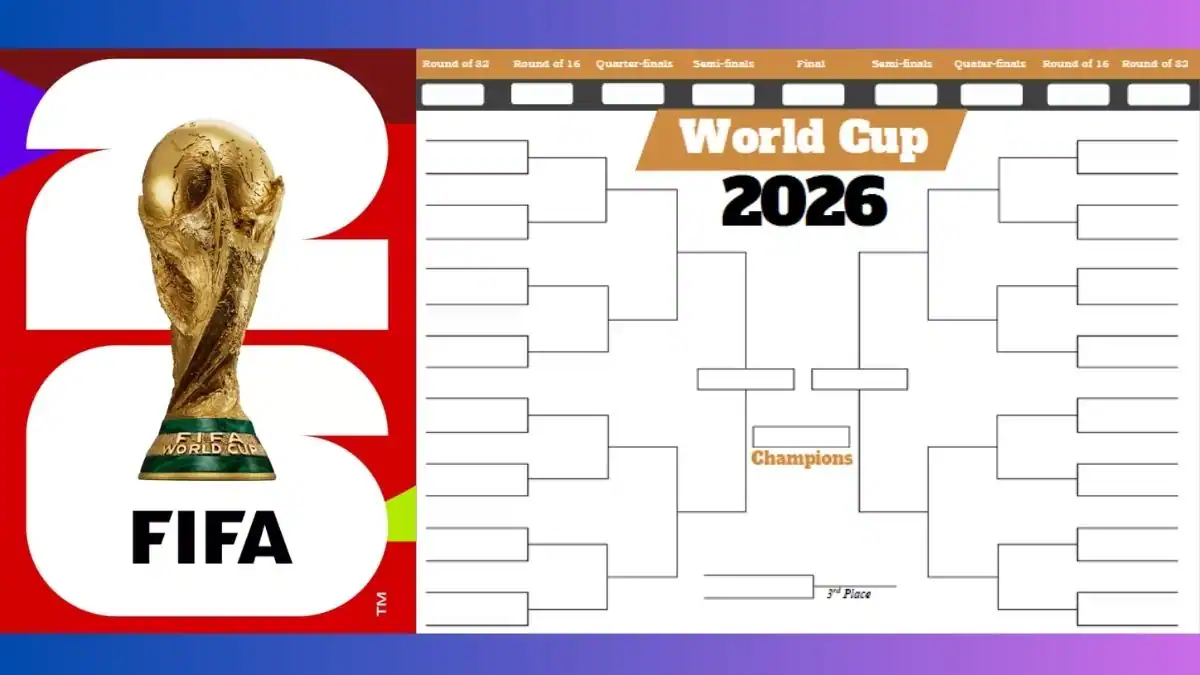
Every match in the Round of 32 is a straight single-elimination contest — win and advance, lose and go home. The 32 teams are seeded into the bracket based on their group stage performance and finishing position, though the specific matchups are partly determined by which groups the eight third-placed qualifiers come from, making some pairings unpredictable until the group stage concludes.
Knockout Stage Structure
Round of 16
Sixteen teams remain after the Round of 32. Winners from each Round of 32 match are placed into pre-determined bracket slots, and the Round of 16 proceeds as a single-elimination round with no replays. The eight winners advance to the quarter-finals.
Quarter-Finals
Eight teams compete in four matches. Winners advance; there are no second chances at this stage. The quarter-finals typically take place over two matchdays, with roughly a day of rest between each pair of games.
Semi-Finals
Four teams play two matches, with the winners meeting in the final and the two losing sides contesting the third-place play-off.
Third-Place Play-Off
The two semi-final losers face each other in a consolation match to determine third and fourth place in the tournament. The match follows standard knockout rules, including extra time and penalties if needed.
The Final
The 2026 World Cup Final is scheduled for July 19, 2026, at MetLife Stadium in East Rutherford, New Jersey — temporarily rebranded as New York New Jersey Stadium to comply with FIFA’s commercial naming requirements. It is the culmination of a seven-round, single-elimination bracket following the group stage.
How the Bracket Is Determined
Unlike a fixed bracket drawn before the tournament begins, the 2026 World Cup knockout bracket is partially fluid because of the eight third-placed qualifiers. Group winners and runners-up have pre-assigned bracket slots based on their group letter (A through L), but the exact Round of 32 matchups involving third-placed teams depend on which groups they finish third in. FIFA has published a pre-set matrix that maps out which group winner or runner-up faces which category of third-place qualifier — but the identities of those third-place teams are only confirmed on the final day of the group stage.
This makes the bracket more dynamic than fans are used to from the 32-team era, where every matchup path was straightforward from the Round of 16 onward. In 2026, a group winner’s first knockout opponent can change based on results in other groups entirely.
Match Rules and Tie-Breakers
Group Stage Tie-Breakers
When two or more teams finish level on points in the group stage, FIFA uses the following criteria to separate them, applied in order:
- Goal difference across all group matches
- Goals scored across all group matches
- Head-to-head points between the tied teams
- Head-to-head goal difference between the tied teams
- Head-to-head goals scored between the tied teams
- FIFA Fair Play points (yellow and red card record)
- Drawing of lots if all above criteria are equal
Knockout Stage Tie-Breakers
If a knockout match ends level after 90 minutes of regulation, the game proceeds to extra time — two additional 15-minute halves. If the score remains tied after extra time, the match is decided by a penalty shootout, with each side taking five kicks in alternating fashion. If still level after five rounds, the shootout continues as sudden death until a winner is determined.
How Many Matches Are Played in Total
The 2026 World Cup will feature 104 matches in total — a significant jump from the 64 matches played at the 2022 tournament in Qatar. The breakdown by stage is as follows:
- Group stage: 72 matches (6 per group × 12 groups)
- Round of 32: 16 matches
- Round of 16: 8 matches
- Quarter-finals: 4 matches
- Semi-finals: 2 matches
- Third-place play-off: 1 match
- Final: 1 match
A team that wins the entire tournament will play 8 matches — one more than the 7 required under the 32-team format.
Schedule and Duration
The 2026 World Cup is scheduled to run for 39 days, compared to 29 days at the 2022 tournament. Key dates are:
- Opening match: June 11, 2026 — Mexico City, Estadio Azteca
- Group stage: June 11–27
- Round of 32: June 28 – July 3
- Final: July 19, 2026 — MetLife Stadium, New Jersey
The extended duration is a direct result of the expanded 104-match schedule and the need to provide adequate rest periods between knockout rounds. FIFA has structured the calendar to ensure teams playing deep into the tournament receive at least three to four days between matches at the knockout stage.
Host Countries and Venues
The 2026 World Cup is co-hosted by three countries: the United States, Canada, and Mexico — the first time in history that three nations have jointly hosted the tournament. Matches will be spread across 16 host cities:
- United States (11 cities): New York/New Jersey, Dallas, Atlanta, Los Angeles, Seattle, Boston, Houston, Kansas City, Miami, Philadelphia, and San Francisco Bay Area
- Mexico (3 cities): Mexico City, Guadalajara, and Monterrey
- Canada (2 cities): Toronto and Vancouver
The large number of venues is a practical necessity given the 104-match schedule. Detailed stadium profiles — capacities, pitch dimensions, and local logistics — warrant a separate dedicated guide for fans planning to attend in person.
How the 2026 Format Compares to Previous World Cups
The World Cup has grown in stages throughout its history. The 16-team format was used from the inaugural 1930 tournament through 1978. FIFA expanded to 24 teams for the 1982 tournament in Spain, a format that ran through 1994. The jump to 32 teams came in 1998 in France and remained in place for every edition through 2022. Given that how often does the world cup happen — every four years — each edition carries enormous weight, which makes the leap to 48 teams in 2026 one of the most consequential changes in the tournament’s near-century of history.
The shift from 32 to 48 teams is not merely numerical. It adds an entirely new round of knockout football, increases the total match count by 62.5%, and redistributes global qualification slots in ways that reshape the competitive landscape.
FAQ
There will be 104 matches across the entire tournament, from the group stage through to the final.
Two teams qualify automatically from every group. Additionally, the eight best third-placed finishers from across all 12 groups also advance, bringing the total number of teams in the knockout stage to 32.
It is a new first-round knockout stage introduced for 2026, featuring the 32 teams that qualified from the group phase. Every match is single-elimination.
Yes. A team that wins one group match and draws another could accumulate four points — potentially enough to finish third in its group and qualify among the eight best third-placed teams. Advancing with just one win and one draw is mathematically possible depending on results elsewhere.
Yes. The two losing semi-finalists meet in a bronze-medal match before the final.
The group stage runs from June 11 to June 27, 2026 — a period of 17 days.
Directly, yes. Confederations like CAF, AFC, and OFC received more guaranteed spots in 2026 than in any previous edition, giving nations from those regions a greater chance of reaching the tournament.
The shootout continues in sudden-death format, with each team alternating kicks until one side scores and the other misses in the same round.
Conclusion
The 2026 FIFA World Cup marks the most significant structural overhaul in the tournament’s modern era. With 48 teams competing across 12 groups, a new Round of 32, and 104 total matches spread over 39 days, the format is broader and more demanding than anything fans have seen before. The three-nation hosting arrangement across the United States, Canada, and Mexico adds further logistical scale to an already historic edition. Understanding the group advancement rules, the bracket mechanics, and the tie-breaker systems is genuinely useful — it transforms what can feel like a sprawling schedule into a coherent competition with clear stakes at every stage.
